You’re charged with trade compliance records if your responsibility creates, reviews, approves, stores, or uses import, export, customs, sanctions, or licensing documents. That often includes trade compliance, logistics, procurement, customs brokers, finance, legal, and IT. You must secure complete, traceable records that support classification, valuation, origin, screening, licensing, filings, corrections, and retention rules. Clear ownership avoids gaps, inconsistent files, and delayed responses to audits or government inquiries. The sections below explain duties, records, retention, and controls.
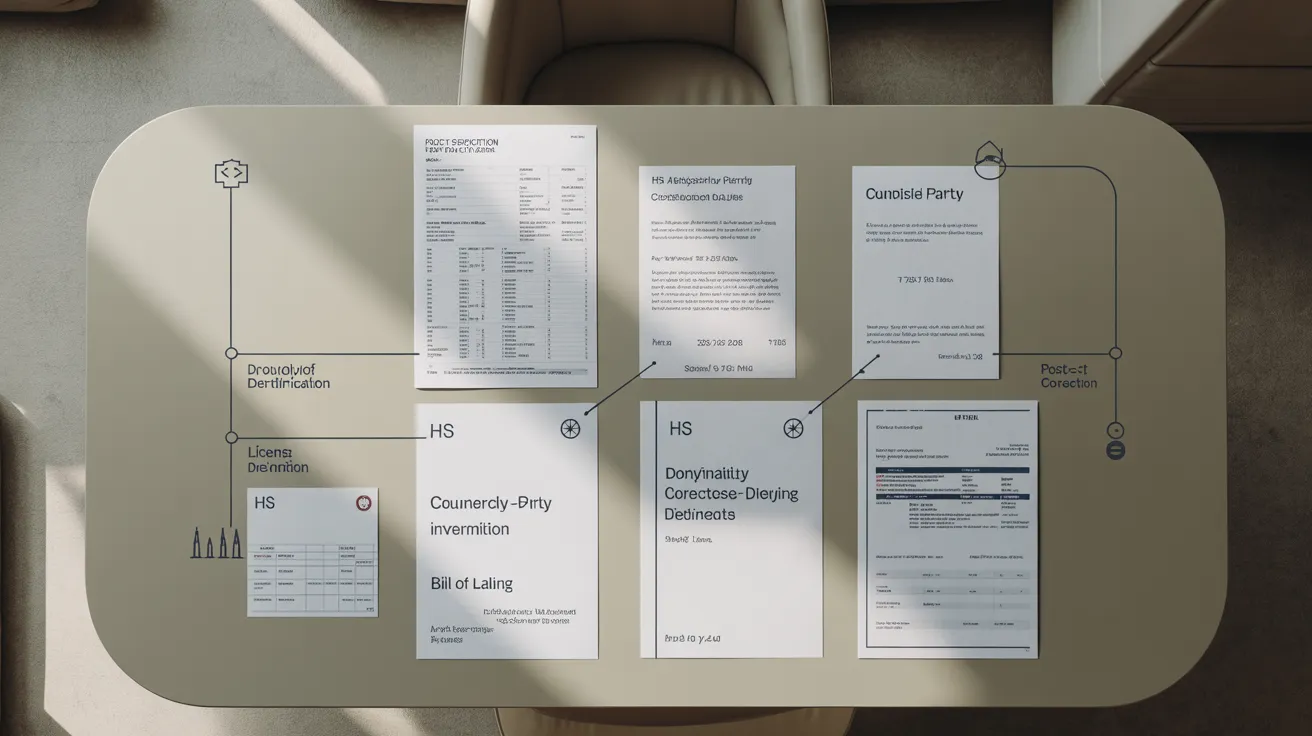
Main Lessons
- Trade compliance records consist of documents and system data that prove imports and exports complied with customs, export control, sanctions, and reporting rules.
- They contain classifications, valuations, origin support, screening results, licenses, billing documents, transport documentation, entry summaries, and payment records.
- These records create an documentation path connecting products, parties, jurisdictions, filings, and any corrections or discrepancy resolutions.
- Companies retain them to facilitate audit processes, respond rapidly to government questions, and demonstrate controls were implemented consistently across transactions.
- Ownership, retention, access controls, and revision control are essential so records keep full, sound, and discoverable when needed.
Explain Trade Compliance Documents
Trade compliance records are the documents and data your company creates, receives, and retains to demonstrate that each import, export, reexport, transfer, or related transaction adhered to applicable customs, export control, sanctions, and trade reporting obligations. They offer an traceable trail demonstrating how you categorized goods, screened parties, applied licenses or exceptions, priced entries, reported shipments, and addressed discrepancies.
You use these archives to substantiate decisions, bolster internal controls, and respond to government inquiries, audits, or investigations. Effective trade document retention protects evidence integrity, accessibility, and traceability across systems and functions. Your record set also includes compliance training logs, policy acknowledgments, escalation notes, and corrective-action documentation because regulators assess whether your program operated consistently, not merely whether a transaction cleared. Accurate records reduce exposure and strengthen defensibility.
What Customs Regulatory Records Are You Required to Keep?
Commence by safeguarding every record that illustrates how you ascertained, executed, and monitored a regulated transaction from commencement through post-entry or post-shipment review. Maintain product data, tariff classification analyses, valuation support, origin determinations, broker instructions, commercial invoices, packing lists, purchase orders, shipping documents, entry summaries, and payment records.
You should also retain export controls records, including screening outcomes, license determinations, permits or exemptions applied, end-use and end-user declarations, technical data assessments, and internal approvals. Retain communications with customs brokers, freight forwarders, vendors, and regulatory bodies when it affects compliance choices. Preserve audit logs from your ERP, denied-party screening platform, and classification systems. If you corrected a submission, preserve the amendment, supporting analysis, and proof demonstrating when you discovered and resolved the discrepancy.
Why Should Trade Compliance Records Be Valued?
Your regulatory records are significant because they help you prevent non-compliance issues, support accurate filings, and document the basis for each transaction. When customs authorities or other agencies audit your compliance activities, comprehensive records allow you to provide rapid responses, verify compliance, and lessen risk of fines, shipment hold-ups, and enforcement measures. They also keep you audit-ready by illustrating that you’ve applied required controls, maintained required data, and followed recordkeeping rules consistently.
Addressing Regulatory Risk Successfully
Because customs authorities and other regulators can audit prior shipments long after clearance, complete trade regulatory documentation minimize your vulnerability to penalties, shipment holds, license violations, and false declaration findings. You need records that validate tariff classification, customs valuation, origin, license determinations, screening results, and broker instructions. When documentation is consistent, current, and accessible, you can avoid discrepancies from escalating into seizures, liquidated damages, or enforcement referrals.
You also reinforce preventive controls by connecting documentation to customs training and supplier vetting. Training records show employees applied approved procedures when preparing declarations and reviewing restricted-party hits. Vendor assessment files substantiate your dependence on vendor data, including origin statements, product specifications, and valuation inputs. Together, these records enable you to identify noncompliant transactions early, fix data defects, and preserve defensible import and export decisions.
Audit Preparedness Advantages
Keeping complete, well-indexed trade compliance records maintains you stay inspection-prepared and permits you to answer rapidly to tariff, export control, and sanctions questions. You can obtain classifications, licenses, denied-party screening results, origin support, valuation data, and shipping documents without delays. That speed demonstrates control, reduces auditor inquiries, and minimizes operational delays to business processes.
Strong file preservation practices also help you verify consistency across operations, business units, and time periods. You create a solid accountability record that binds decisions to primary records, sanctions, and system entries. If agencies audit a portion, you can validate assertions, license exceptions, and results with timestamped documentation. You also identify gaps earlier through internal reviews, correct archival issues, and enhance your position before reviews, disclosures, fine evaluations, or regulatory measures develop.
What Length of time Is Suitable for Preserving Trade Compliance Files?
Although retention periods differ by jurisdiction and variety of transaction, you should maintain compliance records for at least the baseline duration required by the regulations that oversee the importing, exporting, sanctions, and customs dealings at issue, and you should establish that interval from the legally relevant trigger date, such as export, import entry, license expiration, or completion of the transaction.
You must verify the exact rule for each system you touch, because data get more info retention timers don't always start on the same occurrence. Your document record keeping plan should cover entries, licenses, classifications, screenings, communications, and supporting commercial documents. Apply data minimization carefully: keep what the law requires, preserve what substantiates compliance decisions, and delete excess material when permitted. If litigation, an inquiry, or an audit begins, suspend ordinary deletion until the hold is lifted.
Who Is Accountable for Trade Compliance Records?
You must assign distinct responsibility for trade compliance record management, because accountability can't fall with an unclear team or unstructured practice. You should designate the responsible function, document its authority, and guarantee it maintains comprehensive, precise, and accessible records. You also can't handle recordkeeping as a siloed duty
Record Tracking Ownership
Before shipment dispatch, paperwork submission, or examination occurs, make sure to assign record maintenance ownership, since customs and export authorities hold the importer, exporter, filer, or other party identified in the transaction liable for producing complete and accurate trade compliance records.
You need to set up ownership models that specify who directs development, examination, preservation, recovery, and removal of every document type. Your designation must correspond to the legal role within the deal and the system where source data originates. Effective information governance demands you grant authority to oversee revision management, protect metadata, confirm changes, and prohibit unauthorized deletion. You also need formal processes that identify the data custodian for entry summaries, commercial invoices, classifications, licenses, screening results, and intermediary guidance. Without explicit ownership, retention gaps, conflicting records, and slow delivery in audit situations become far more likely.
Cross-Functional Accountability
Record ownership sets the foundation, but cross-functional accountability determines whether those records remain complete, accurate, and producible throughout the transaction lifecycle. You can't rely on trade compliance alone. Procurement, logistics, customs brokers, finance, IT, and legal each generate, transmit, validate, or retain record elements subject to retention, audit, and disclosure requirements.
Ensure you appoint documented obligations for data entry, classification support, origin substantiation, broker instruction review, shipment document reconciliation, and system access controls. Strong cross border coordination assures documentation align across jurisdictions, languages, and platforms. Active stakeholder engagement helps to resolve discrepancies ahead of filings, entries, or post-entry corrections. Establish escalation paths, version control, retention triggers, and periodic testing, so every function can show accountability and produce defensible records on demand during audits or government inquiries.
What's the Best Method to Categorize Trade Compliance Records?
Generally, the most productive way to organize trade conformance records is to mirror your actual deal progression so each file assembles the item, parties, jurisdiction, classification, licensing determination, screening results, shipping documents, and post-entry activity in one traceable sequence.
You should maintain consistent document categorization rules by transaction, product, customer, supplier, and country, then classify each record with version control, responsible owner, and effective date. Utilize standardized folder structures and naming conventions so auditors can promptly obtain source documents, correspondence, certifications, and system outputs without delay. Your retention scheduling must conform to applicable customs, export controls, sanctions, and tax requirements in every relevant jurisdiction. Maintain secure access controls, audit trails, and cross-references between physical and electronic repositories to demonstrate completeness, integrity, and timely retrieval during reviews or government inquiries.
What Trade Compliance Records Mistakes Are Typical?
Common problems in trade compliance documentation usually spring from gaps in completeness, consistency, and retention rather than from a single lost document. You often observe files that lack commercial invoices, packing lists, broker communications, or internal approvals, leading to missing files that weakens traceability. You may also keep records in different formats without version control, which makes comparison difficult during reviews.
You can also produce liability when you maintain records under non-standard naming conventions, split related entries across applications, or neglect to document amendments. Inaccurate classifications, unsupported country-of-origin determinations, and separated valuation support are frequent errors. If you don't synchronize retention periods with applicable import, export, and sanctions requirements, you weaken record integrity. You should also observe incomplete audit trails, repeated files, and records that can't be produced promptly.
What Function Do Trade Compliance Records Play in Avoiding Fines?
Strong trade compliance documentation reduce penalty exposure because they permit you to establish what you disclosed, when you disclosed it, and the basis for each action. During an assessment, you can deliver entry data, invoices, rulings, licenses, and broker instructions that substantiate declared value, origin, and qualification. That evidence shows reasonable care and constrains assertions of negligence.
You also prevent repeat issues by documenting controls around classification systems, restricted-party screening, valuation methods, and record retention. If customs raises questions about a discrepancy, you can trace the transaction, identify the approver, and demonstrate corrective action. Records from training programs further prove that staff understood procedures and escalation requirements. With complete, contemporaneous files, you cut down response times, support prior disclosures, and decrease the likelihood of seizures, liquidated damages, and civil penalties.
Frequently Inquired Questions
Is it Prudent for Smaller Companies to Delegate Trade Compliance Documentation?
Yes, you can delegate trade compliance recordkeeping safely if you control Outsourcing exposures through robust contracts, limited permissions, encryption, and audit privileges. You should prioritize vendor vetting by reviewing the provider's compliance background, information storage procedures, incident management, and internal controls. You must also verify legal obligations, data accessibility, and storage timeframes. If you track effectiveness and document oversight, you'll reduce liability and maintain compliance with applicable trade regulations.
What Role Do Digital Solutions Play in Enhancing Trade Compliance Record Exactness?
Automated platforms enhance your trade compliance record precision by standardizing entries, identifying issues, and maintaining records. You reduce manual input, avoid duplicate records, and maintain version control. With automatic checking, you detect missing data, inconsistent classifications, and expired licenses before filing. With AI reconciliation, you analyze invoices, entries, and shipping records quicker and more accurately. You also strengthen retention compliance, retrieval speed, and defensible documentation during regulatory audits.
Do Commerce Regulatory Record Mandates Differ Across Countries?
Yes, you must anticipate trade regulatory record requirements to vary across nations. National variations impact storage periods, permissible structures, access rules, and inspection expectations. You also need to track documentation limits, because regulators may require distinct supporting records based on consignment value, product type, origin, or permit status. If you standardize core documents yet align regional rules region by jurisdiction, you'll reduce infractions, assist border investigations, and preserve defensible compliance controls.
What Instruction Supports Workers Maintain Trade Compliance Records Effectively?
You aid employees in managing trade compliance records correctly through targeted recordkeeping training, export controls coursework, classification instruction, and audit-readiness drills. Retention periods, document accuracy, restricted-party screening support files, licensing records, and escalation procedures must be addressed by you. Role-based training for shipping, logistics, sales, and compliance staff is also needed for you to provide. Refresher sessions, testing, and documented attendance bolster accountability and help you show consistent compliance during internal reviews and government audits.
How consistently Should Companies inspect Their Trade Compliance Records?
You should examine your trade compliance records at least annually, with annual audits covering core paperwork, retention, classification, licensing, and filing accuracy. You should also use risk based audits more frequently when your company manages high volume shipments, regulated products, new markets, or prior violations. If your risk profile changes, you should enhance audit frequency promptly. This plan helps you spot gaps, correct errors, and support ongoing regulatory compliance.
Concluding observations
Trade compliance records form your paper trail through customs, audits, and enforcement reviews. Keeping complete, reliable, and current records gives you a clear line of sight from grading and appraisal to licensing and shipment history. That discipline enables you to prove reasonable care, fix errors swiftly, and reduce penalty exposure. Store records in a structured way, maintain them for the necessary period, and assign ownership. In the midst of regulatory storms, well-kept records are the lantern that keeps your operation on course.